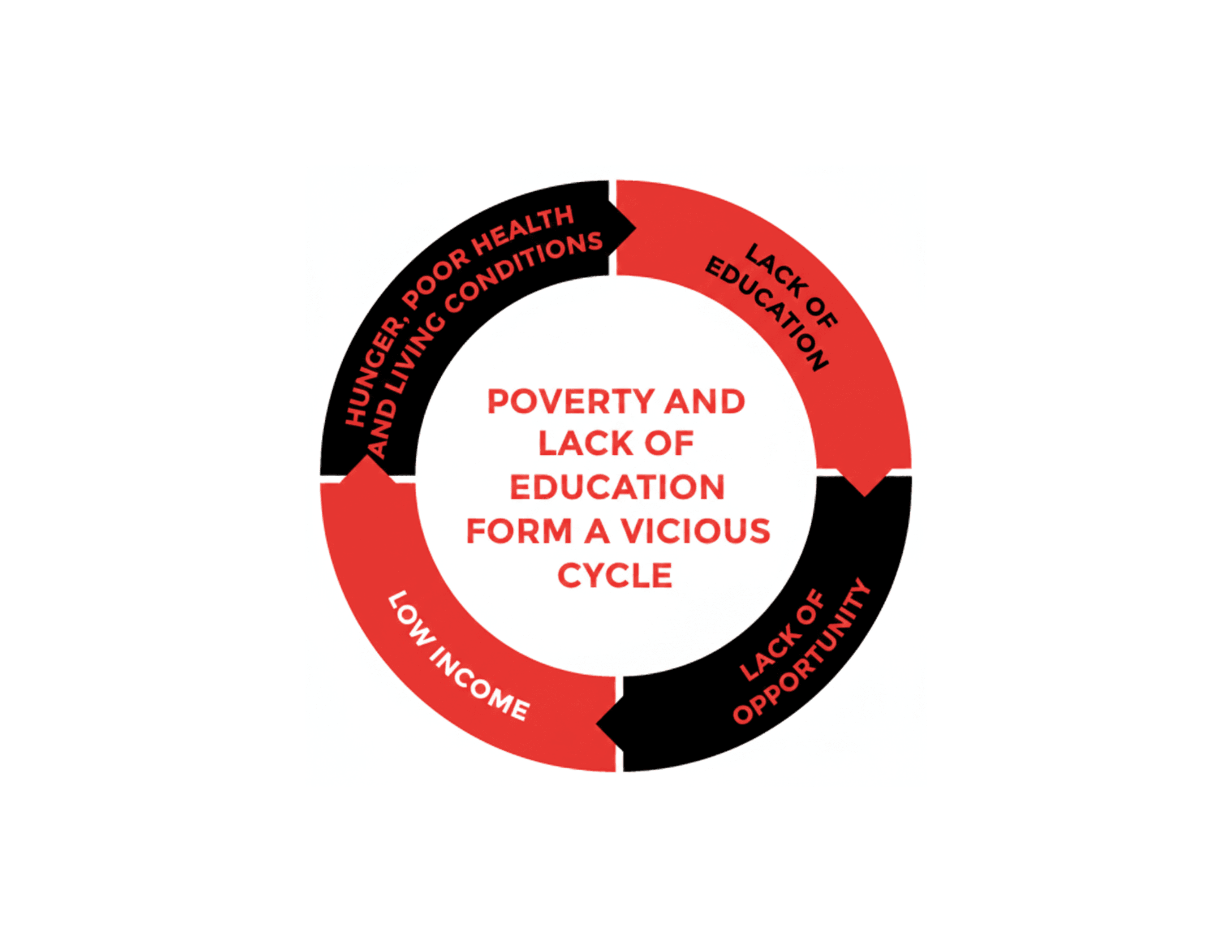
Poverty is more than a lack of funds; it is a burden that robs a child of their childhood. When hardworking families are forced to live in the immediate "now"—choosing between food, heat, health and basic care— a child in need becomes a child in crisis.
This chronic stress creates a survival mindset that narrows a child’s vision for the future. In this environment, challenges trigger chain reactions that steal a child abiity to learn and dream. It is nearly impossible to "aim high" while held down by the weight of struggle.
Left unaddressed, this burden fuels a generational cycle that can persist for decades. Without a strong foundation and strategic intervention, the path toward a better future remains out of reach.
More "Hidden" Barriers
- The Oral Health Crisis: Nearly 40% of Vermont children suffer from early childhood cavities, and 1 in 4 need immediate dental care. With 25% of children suffering from untreated decay and 6% in urgent pain or infection, this crisis is a primary barrier to a child's health and self-esteem.
- Geographic Isolation & Limited Access: Without access to resources or reliable transportation, families struggle to access food, medical care, and schools. In rural areas, it often is a total barrier to essential services.
- A Youth Mental Health Crisis: Suicide is a leading cause of death for younger Vermonters. Windham County continues to face statistically higher rates of suicide compared to the state overall. High levels of anxiety and depression serve as significant barriers to academic engagement and career exploration.
- The Literacy Crisis: 57% of Vermont’s fourth-graders currently read below proficiency. This literacy gap is a direct impact of the interruption to education caused by the pandemic.
- Barriers to Career Advancement: Vermont youth face significant hurdles in navigating postsecondary education and training, often driven by increased family and work responsibilities. This is compounded by a widening aspirational gap and limited, localized career exploration opportunities in rural areas.
- Food Insecurity: 1 in 7 Vermont children face hunger. For the 2024-2025 school year, a family of four must earn between $41,795 and $59,478 to qualify for school meal assistance.
- The Financial Literacy Gap: Only 11 of Vermont's 55 high schools require financial education for graduation. This lack of vital education is a major barrier to future economic independence and perpetuates the cycle of poverty.
Understanding the reality of poverty is the first step; taking action is the next! Learn how we shift a child's internal mindset from survival to potential.